From Celebrity Status Symbol to Cult Classic: Why This 90s Compact Still Commands a King’s Ransom in 2025
In the bustling digital world of 2025, where computational photography has reached dizzying heights, there exists a curious anomaly—a film camera from 1990 that refuses to fade into obsolescence. The Contax T2 isn’t just surviving; it’s thriving, commanding prices that would make even the most seasoned camera collectors raise an eyebrow. What magic lies within this titanium shell that continues to captivate photographers across generations? Let’s peel back the layers of this photographic legend and discover why the Contax T2 remains the undisputed king of premium point-and-shoot cameras.
The Genesis of an Icon
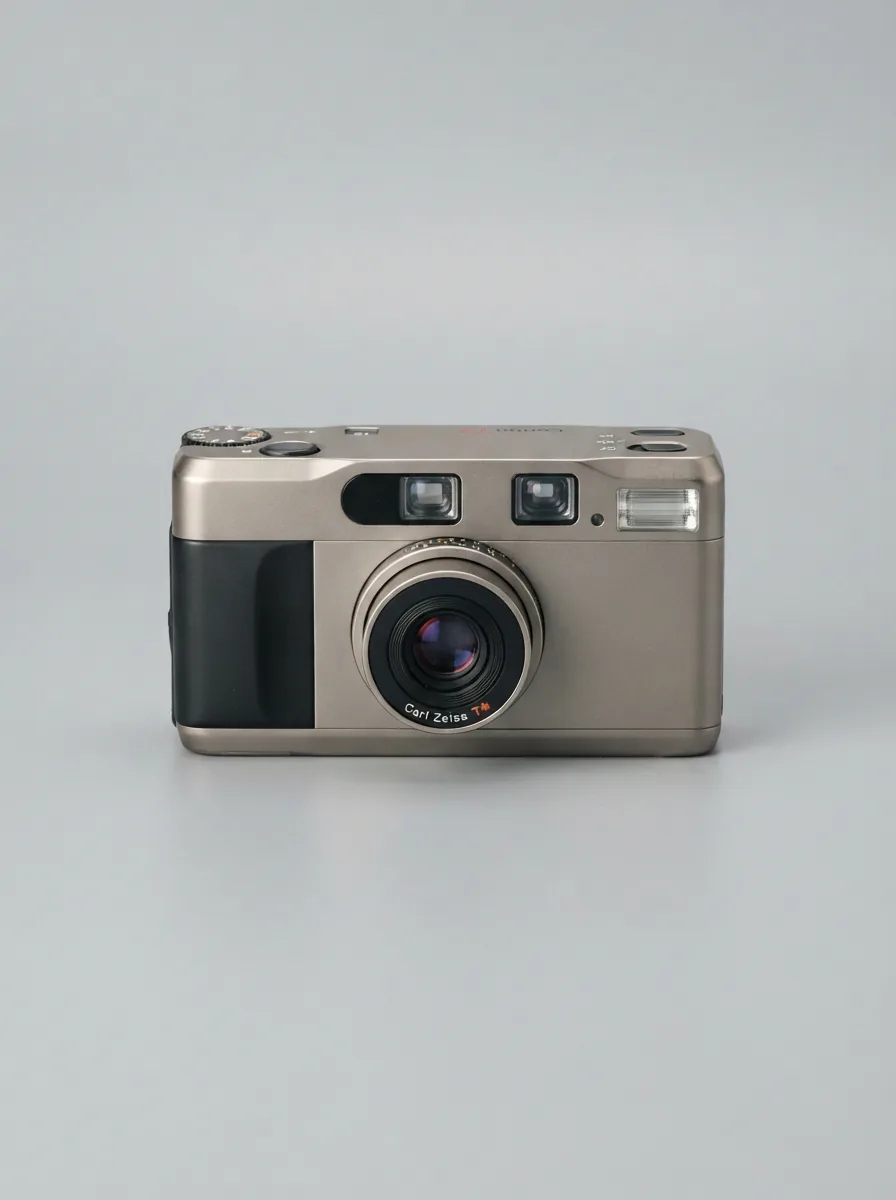
When Kyocera unveiled the Contax T2 in 1990, film photography was at its commercial zenith. Yet even in that crowded marketplace, the T2 stood apart. It wasn’t merely a camera; it was a statement—a harmonious fusion of German optical engineering and Japanese precision wrapped in a sleek titanium body.
The T2 wasn’t Kyocera’s first attempt at capturing the premium compact market. Its predecessor, the T, had already established a reputation for excellence. But the T2 refined that formula to near perfection. Its Carl Zeiss Sonnar 38mm f/2.8 lens offered a versatility that appealed to both casual shooters and serious photographers, while its robust construction promised longevity in an era of increasingly disposable consumer goods.
What its creators couldn’t have anticipated was how this camera would transcend its intended lifespan, becoming more coveted three decades later than it was upon release.
The Anatomy of Excellence
To understand the T2’s enduring appeal, we must first dissect what makes it exceptional. At its heart lies that aforementioned Carl Zeiss Sonnar lens—a five-element, four-group optical design that delivers a distinctive rendering quality that digital algorithms still struggle to replicate authentically.
The lens sits behind a protective clamshell that, when opened, transforms the sleek metal brick into a ready-to-shoot camera. This mechanical action—so tactile and satisfying—connects photographer to machine in a way that touchscreens simply cannot. There’s a weight to it, both literal and figurative, that signals quality.
The viewfinder, bright and generous for a compact camera, offers parallax correction markings and frame lines that adjust based on focus distance—a level of sophistication rarely seen in compact cameras of its era. The exposure system, while automated, provides enough control through exposure compensation to satisfy photographers who appreciate a measure of creative input.
Then there’s the build quality. That titanium body isn’t just about aesthetics; it’s about creating a tool that feels substantial in the hand while remaining lighter than its brass-bodied contemporaries. Every dial, every button, every surface of the T2 communicates permanence in an increasingly ephemeral world.
The Celebrity Endorsement Effect
The T2’s journey from premium compact to cultural icon received a significant boost from unlikely quarters—Hollywood celebrities and fashion photographers. In the mid-2010s, as film photography began its nostalgic resurgence, the T2 found itself in the hands of influential tastemakers.
Kendall Jenner, Frank Ocean, and Chris Hemsworth were spotted with the distinctive titanium compact. Fashion photographers like Mario Testino praised its capabilities. Suddenly, the T2 wasn’t just a camera; it was a celebrity in its own right.
This exposure created a snowball effect. As more celebrities showcased their T2s, demand surged. Prices climbed steadily, then dramatically. A camera that could be found for $500 in 2015 commanded $1,500 by 2020. In 2025, mint condition examples regularly fetch upwards of $2,500—sometimes approaching $3,000 for particularly pristine specimens.
The T2 vs. T3 Debate: Siblings with Different Personalities
The Contax lineup eventually welcomed a successor to the T2—the smaller, more technically advanced T3. Released in 2001, the T3 represented what many would consider an objective improvement: a sharper 35mm f/2.8 Sonnar lens, more compact body, and refined ergonomics.
Yet curiously, the T2 has maintained its position as the more desirable model for many collectors and users. Why? The answer lies partly in ergonomics. The T2’s slightly larger body offers a more comfortable grip for many hands. Its viewfinder is larger and brighter, making composition more pleasurable. The exposure controls—particularly the dedicated exposure compensation dial—are more intuitive on the T2.
Then there’s the matter of repairability. Both cameras have become increasingly difficult to service as parts become scarce, but the T2’s relatively simpler design makes it somewhat more repairable than its more complex younger sibling.
Perhaps most importantly, the T2 hit a sweet spot in design that photographers connect with emotionally. The T3, while technically superior in some respects, lacks some of the charismatic quirks that make the T2 so endearing. It’s a reminder that the best tools aren’t always defined by technical specifications alone.
The Price of Admission: Justifying the Investment
The elephant in the room when discussing the Contax T2 in 2025 is, undoubtedly, the price. With functioning examples commanding $2,000-3,000, potential buyers face a legitimate question: Is any 35-year-old point-and-shoot film camera worth that kind of investment?
The answer depends entirely on what you value. If you’re seeking the absolute best technical image quality available, that money would be better spent on a modern digital system. If you’re looking for the most versatile film shooting experience, a quality SLR system would offer more flexibility for less money.
But if you’re drawn to the unique combination of portability, build quality, optical excellence, and yes, status that the T2 offers, the calculus changes. What you’re buying isn’t just a camera; it’s an experience that can’t be replicated by any other photographic tool.
There’s also the matter of investment potential. While photography gear generally makes for poor financial investments, the T2 has been an exception to this rule. Those who purchased examples for $500-700 in the early 2010s have seen their investments appreciate significantly. Whether this trend continues depends on many factors, including the ongoing interest in film photography and the finite supply of functioning T2s.
The Hunt: Where to Find Your T2 in 2025
For those convinced that the T2 is worth the price of admission, the next question becomes: where to find one? As production ceased decades ago, all T2s on the market are pre-owned, with varying degrees of wear and functionality.
Specialized camera retailers that deal in vintage equipment remain the safest, albeit most expensive, option. Establishments like KEH Camera, Bellamy Hunt’s Japan Camera Hunter, and Brooklyn Film Camera offer tested, often warranted examples, providing peace of mind that justifies their premium pricing.
Auction sites like eBay continue to feature T2s regularly, though buyers should proceed with extreme caution. The high value of these cameras has attracted sellers who may not fully disclose issues or, in worst cases, misrepresent the condition entirely. If pursuing this route, look for sellers with extensive positive feedback specifically for camera sales, detailed descriptions, and numerous clear photos showing all aspects of the camera’s condition.
Photography forums and marketplaces like Fred Miranda and r/photomarket occasionally feature T2s from enthusiasts who understand these cameras well. These can offer better value than retail outlets while providing more security than anonymous auction listings.
Local options shouldn’t be overlooked either. Estate sales, camera swap meets, and even pawn shops in affluent areas occasionally yield T2s from owners unaware of their current value. These rare finds represent the best possible scenario: cameras that haven’t been caught up in the hype cycle and might be available for more reasonable prices.
The Film Factor: Feeding Your T2
The Contax T2 accepts standard 35mm film, which, despite numerous obituaries written for the format, remains readily available in 2025. In fact, the film renaissance has brought with it new emulsions and the revival of classic stocks, giving T2 owners more creative options than were available even during the camera’s production years.
For color work, Kodak Portra (available in 160, 400, and 800 ISO variants) remains a popular choice for its pleasing skin tones and forgiving exposure latitude. Fujifilm’s Pro 400H may have disappeared, but its consumer-grade Superia series offers vibrant colors at a more accessible price point. For those seeking something different, Cinestill 800T brings the look of motion picture film to the T2, while boutique films like Dubblefilm and Lomography stocks offer unique color profiles.
Black and white shooters are equally well-served. Ilford’s range (particularly HP5+ and Delta 400) offers excellent tonality and flexibility in development. Kodak Tri-X continues its decades-long reign as the photojournalist’s choice, while T-Max provides a more modern, fine-grained alternative. For those seeking extreme contrast, JCH Street Pan and Kosmo Foto Mono deliver dramatic results that pair well with the T2’s sharp lens.
Loading film into the T2 is straightforward, though it requires a bit more care than some automatics. With the camera powered on and the clamshell opened, the film door on the camera’s back is released via a small switch. The film cartridge fits into the left chamber, with the leader pulled across to the take-up spool on the right. After closing the back, the camera automatically advances to the first frame when the shutter button is pressed. A display on the top plate confirms successful loading by showing the frame count.
The Shooting Experience: Why Photographers Fall in Love
Technical specifications and collectibility aside, what truly distinguishes the Contax T2 is the shooting experience it offers. In an age of instant gratification, the T2 forces a slower, more deliberate approach to photography.
The process begins with that satisfying slide of the clamshell cover. The camera awakens with a soft whir as its electronics come to life. Bringing it to your eye reveals a viewfinder that, while not as expansive as an SLR’s, offers a bright, clear view of your subject with precise frame lines.
The autofocus system, while primitive by today’s standards, hits with surprising accuracy in most lighting conditions. For those situations where precise focus control is needed, the T2 offers a manual focus mode controlled via a ring around the lens—complete with distance markings that allow for zone focusing techniques beloved by street photographers.
The shutter release requires just the right amount of pressure—enough to prevent accidental exposures but responsive enough for decisive moments. When pressed, the leaf shutter fires with a hushed click that barely registers compared to the mechanical clack of an SLR or the electronic beep of a digital camera. This discretion makes the T2 ideal for candid photography in quiet environments.
After exposure, the film advances automatically, the motor emitting a soft purr as it prepares the next frame. This rhythm—compose, focus, shoot, advance—becomes meditative with practice, slowing the photographic process to a pace that encourages thoughtfulness.
And then there’s the anticipation. Unlike digital photography, you cannot immediately review your results. Each frame exists as potential energy until the roll is complete and developed. This gap between capture and revelation changes how you approach photography, encouraging a trust in your instincts and technical skills that instant feedback often undermines.
Durability Concerns: The Achilles Heel
For all its titanium-clad robustness, the Contax T2 harbors a uncomfortable truth: it’s becoming increasingly difficult to repair. As a sophisticated electronic camera now decades beyond its production, the T2 contains components that are no longer manufactured and circuitry that few technicians are equipped to service.
The most common issues involve the electronic systems rather than the mechanical components. Flash failures, autofocus inaccuracy, and meter malfunctions top the list of reported problems. More catastrophically, some T2s suffer from circuit board failures that render the camera completely inoperable—expensive paperweights in stylish titanium housing.
This repairability crisis has created a sobering reality for T2 owners and prospective buyers: every functional T2 is living on borrowed time. While some may continue operating flawlessly for years or even decades, others may fail without warning, with little hope of resurrection.
This vulnerability has influenced the market in several ways. First, it has placed an even higher premium on factory-serviced examples or those recently checked by the few technicians still willing to work on these cameras. Second, it has encouraged some owners to use their T2s sparingly, preserving them like vintage wines brought out only for special occasions. Finally, it has driven interest in mechanical alternatives that, while perhaps less convenient, promise greater longevity through simpler design.
The Beginner’s Dilemma: Is the T2 a First Film Camera?
Given its premium status and potential fragility, is the Contax T2 an appropriate camera for someone just entering film photography? The question invites passionate debate among enthusiasts.
Those arguing against it point to the prohibitive cost, the learning curve of film photography (which often involves many “wasted” frames during the early stages), and the stress of handling such a valuable object while still developing basic skills. They suggest starting with more affordable options like the Canon Sureshot series, Olympus Stylus line, or even a manual SLR like the Pentax K1000, which teaches fundamental photographic principles while being repairable and replaceable.
On the other hand, proponents suggest that the T2’s excellent metering, sharp lens, and intuitive controls actually make it an ideal learning tool—one that won’t hold back a developing photographer’s vision. They argue that the financial investment may actually encourage more thoughtful shooting habits and greater care for the craft.
A middle path might be most sensible: beginners with the financial means to absorb the cost without anxiety might well start with a T2, while those more budget-conscious or uncertain of their commitment to film would be better served by cutting their teeth on more modest equipment.
The T2 vs. G2: Cousins, Not Competitors
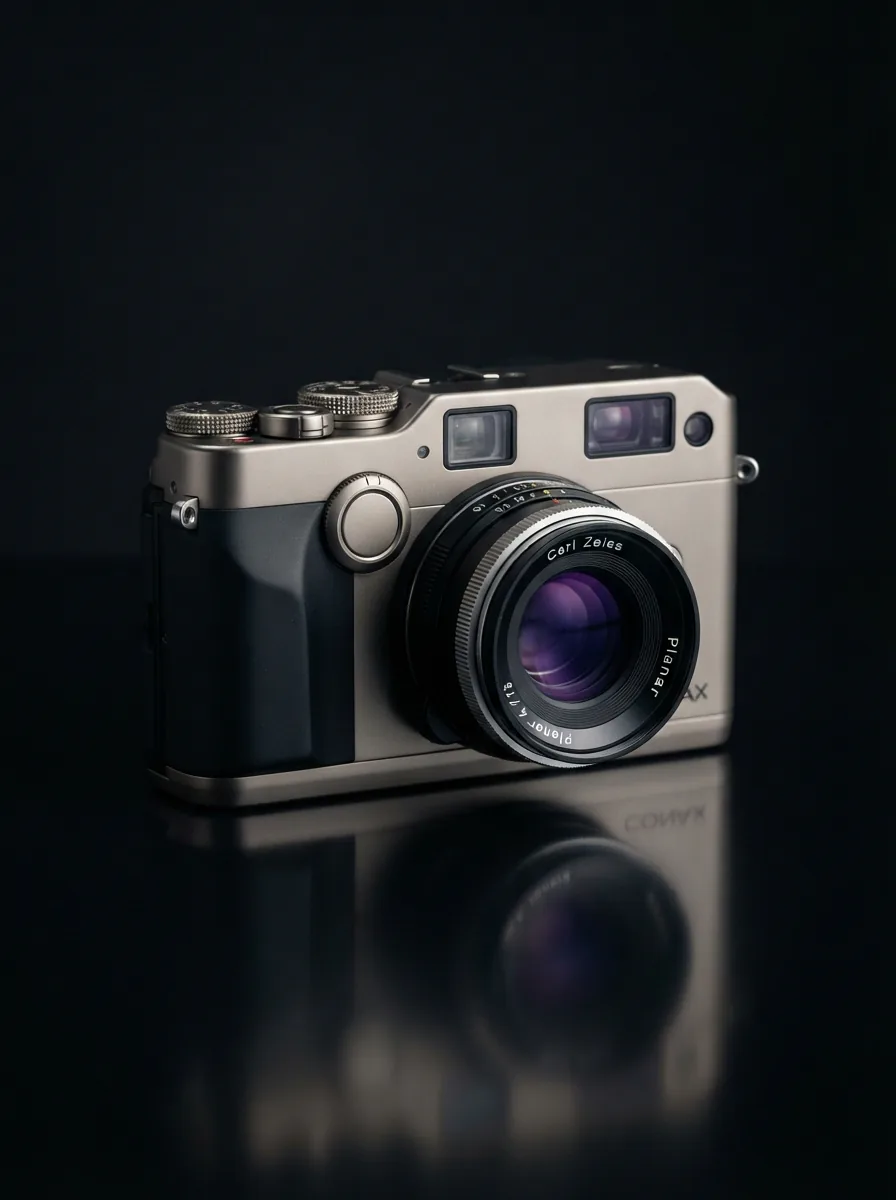
Another Contax camera that often enters the conversation when discussing the T2 is the G2—the flagship of Contax’s G series rangefinders. While both bear the Contax name and feature Zeiss lenses, they represent fundamentally different approaches to photography.
The G2 is an interchangeable lens rangefinder system that offers significantly more versatility than the fixed-lens T2. With lenses ranging from 16mm ultra-wide to 90mm portrait focal lengths (all crafted by Carl Zeiss), the G2 can adapt to virtually any photographic scenario. Its rangefinder focusing system, while requiring some practice, offers precision that the T2’s autofocus can’t match in challenging situations.
However, this versatility comes with trade-offs. The G2 is substantially larger and heavier than the T2, making it less suitable for casual, everyday carry. Its operation is more complex, requiring more decisions from the photographer. And while both cameras are expensive on the vintage market, building a complete G2 system with multiple lenses represents a significantly larger investment than a single T2.
Rather than competitors, these cameras serve different needs within a photographer’s arsenal. The T2 excels as a carry-everywhere companion that delivers excellent image quality with minimal fuss. The G2 shines as a more deliberate tool for photographers who value versatility and precise control over absolute convenience.
Maintenance and Care: Preserving Your Investment
Given the limited repair options and the T2’s status as both tool and investment, proper maintenance becomes crucial for extending its functional lifespan. While no maintenance regimen can guarantee indefinite operation of electronic components, several practices can help preserve mechanical functions and prevent avoidable damage.
First and foremost, protect the lens. The Zeiss Sonnar is the heart of the T2’s image-making capability, and unlike modern digital lenses, it cannot be replaced without replacing the entire camera. A high-quality UV filter offers basic protection against scratches and impact, though purists may prefer to shoot without one to preserve maximum image quality. When not in use, always keep the clamshell closed to shield the lens.
Battery management is another critical aspect of T2 care. The camera uses a CR123A lithium battery, which should be removed during long periods of disuse to prevent leakage that could damage the electrical contacts. Carrying a spare battery is advisable, particularly for travel, as the camera becomes completely inoperable without power.
Regular exercise prevents mechanical stagnation. Even if you’re not actively shooting with your T2, operating all controls, firing the shutter, and cycling through the focus range periodically helps keep mechanisms functioning smoothly. This is particularly important for cameras that spend most of their time in storage or display.
Climate control matters significantly. Extreme temperatures, high humidity, and rapid temperature changes are all enemies of precision electronics and mechanics. Store your T2 in a cool, dry environment, ideally with silica gel packets to absorb moisture. When bringing the camera from cold to warm environments, allow it to acclimate gradually to prevent condensation forming inside the lens or on electronic components.
Finally, consider periodic professional check-ups if you can find a technician willing to service these cameras. Even if no problems are apparent, preventative maintenance might identify issues before they become terminal.
Accessories: Enhancing the Experience
While the Contax T2 was designed as a self-contained photographic tool, several accessories can enhance the experience and protect your investment.
The original Contax leather case offers both protection and a touch of vintage class, though these have become almost as coveted as the cameras themselves. Modern alternatives from artisanal leather workers and camera accessory companies like Gordy’s Camera Straps or Luigi’s Camera Straps offer beautiful, protective options often custom-made to fit the T2’s unique dimensions.
A quality neck or wrist strap is essential—not just for convenience but for security. Given the camera’s value, dropping it could be a costly accident. Many photographers opt for artisanal leather or woven straps that complement the T2’s premium aesthetic while providing secure attachment points.
Filters represent another accessory category worth considering. Beyond the protective UV filter mentioned earlier, creative options like polarizers (useful for controlling reflections and enhancing skies) and color filters (particularly yellow, orange, and red for black and white photography) can expand the T2’s creative potential. The 40.5mm filter thread size is less common than standard sizes like 52mm or 58mm, so dedicated T2 filters may require some hunting.
For those using the T2 in varied lighting conditions, an external light meter might prove useful, particularly when working at the edges of the camera’s metering capabilities. Compact digital meters like the Sekonic L-308X fit easily in a camera bag and provide confidence when shooting in tricky lighting situations.
The Contax Legacy: From Production to Phenomenon
Understanding the T2’s current status requires a brief journey through Contax’s history. The brand itself has roots stretching back to pre-war Germany, where the original Contax cameras were produced by Zeiss Ikon as premium competitors to Leica. After World War II, the Contax name and designs were split between East and West, with various iterations appearing from different manufacturers.
The Contax brand as most modern photographers know it emerged from a partnership between Carl Zeiss (West Germany) and Yashica (later acquired by Kyocera) of Japan, beginning in the 1970s. This collaboration produced a series of high-end cameras that combined German optical engineering with Japanese electronics and manufacturing precision.
The T series, beginning with the original Contax T in 1984, represented an attempt to create truly premium compact cameras at a time when the market was flooded with plastic point-and-shoots. The T2, released in 1990, refined this concept to near perfection. The T3, arriving in 2001, would be the final evolution of the line before Kyocera announced its withdrawal from the camera business in 2005.
This corporate exit inadvertently set the stage for the T2’s later cult status. With production permanently ended and no direct modern equivalent emerging from other manufacturers, the T2 became not just a functional tool but a finite resource—increasing its desirability as film photography began its nostalgic resurgence in the 2010s.
Low Light Performance: Limitations and Techniques
The Contax T2’s maximum aperture of f/2.8, while respectable for a compact camera, places certain limitations on its low-light capabilities compared to faster lenses found on premium digital cameras or high-end film SLRs. However, understanding these limitations allows photographers to work effectively within them.
In practice, the T2 handles moderately low light situations competently. The meter is accurate down to relatively dim conditions, and the lens performs admirably at its maximum aperture without excessive softness or vignetting. The camera’s program mode tends to keep shutter speeds above 1/30s whenever possible, helping to prevent camera shake with handheld shooting.
For situations where ambient light falls below what the T2 can handle effectively, the built-in flash provides a convenient solution. While not as powerful or versatile as dedicated flash units, it offers enough illumination for indoor portraits and social documentation at moderate distances. The flash exposure system is generally reliable, avoiding the harsh overexposed look common to many compact camera flashes of its era.
For those seeking to push the T2’s capabilities further, higher-sensitivity films provide an excellent solution. While ISO 400 film strikes a good balance for general use, pushing to ISO 800 or 1600 (either through higher-speed film or push-processing) extends the camera’s useful range into dimmer environments. Films like Kodak T-Max P3200 or Ilford Delta 3200 can be particularly effective for nighttime street photography or indoor available light situations.
Manual Control: Working Within Constraints
Unlike fully manual cameras, the T2 operates primarily as an automated system with overrides rather than a camera offering complete manual control. This distinction is important for photographers accustomed to dictating every exposure parameter independently.
The camera’s primary exposure mode is programmed automatic, where the T2 selects both aperture and shutter speed based on its meter reading. The photographer can influence this selection through the exposure compensation dial, which allows adjustments from -2 to +2 stops in 1/3 stop increments—adequate for most situations requiring exposure intervention.
For more specific control, the T2 offers an aperture priority mode. By rotating the aperture ring to a specific f-stop (from f/2.8 to f/16), the photographer dictates the aperture while the camera selects an appropriate shutter speed. This proves particularly useful for controlling depth of field or ensuring maximum sharpness when needed.
Focus control provides another area of manual intervention. While the autofocus system handles most situations adequately, switching to manual focus allows precise distance selection via the focus ring. Combined with the distance scale and depth of field indicators, this enables zone focusing techniques beloved by street photographers who need to capture fleeting moments without autofocus delay.
Common Issues: What to Watch For
Prospective buyers and current owners should be aware of several common issues that affect the T2 with increasing frequency as these cameras age:
- Autofocus failures represent perhaps the most common malfunction. Symptoms include inability to achieve focus lock, focusing consistently in front of or behind subjects, or erratic focus behavior. In some cases, this results from mechanical wear in the focus mechanism; in others, it indicates electronic controller issues.
- Meter inaccuracy develops in some cameras, resulting in consistently over or underexposed images. This can sometimes be compensated for using the exposure compensation dial if the pattern is consistent, but indicates deterioration in the light-sensing system.
- Flash problems manifest in several ways, from complete flash failure to inconsistent firing or exposure errors when using flash. The capacitor system that powers the flash is particularly prone to degradation over time.
- LCD display failure, while not affecting the camera’s core functions, makes monitoring frame counts and camera settings more difficult. This typically results from deterioration of the display elements or their connecting circuitry.
- Battery drain issues occur in some examples, where batteries deplete abnormally quickly even when the camera isn’t being used. This often indicates a short circuit developing somewhere in the electrical system.
- Mechanical jams can affect the film advance or rewind mechanisms. Unlike electronic issues, these sometimes respond to professional cleaning and lubrication, though finding technicians willing to open these cameras becomes increasingly difficult.
- Light leaks occasionally develop as light-sealing foam deteriorates with age. These typically appear as streaks or fog on negatives and can sometimes be addressed by replacing the seals—one of the few DIY repairs reasonably attempted on these cameras.
When evaluating a potential purchase, testing these functions thoroughly before committing can save considerable disappointment and expense.
The Celebrity Connection: More Than a Status Symbol
The T2’s association with celebrities deserves deeper examination than merely noting its appearance in famous hands. This connection reveals something meaningful about both the camera and the nature of photography in the digital age.
For celebrities living under constant digital surveillance, film photography offers a rare form of control. Digital images can be instantly shared, manipulated, and disseminated. Film requires development, scanning, and deliberate distribution—providing a buffer between capture and potential public consumption. This measured pace allows for more intentional image sharing, particularly appealing to those whose images have significant commercial and personal value.
The T2’s aesthetic qualities also align perfectly with contemporary visual trends that favor authenticity over perfection. The characteristic look of film—with its grain, distinctive color rendition, and occasional “imperfections”—provides a counterpoint to the clinical precision of digital imagery. For celebrities crafting personal brands that emphasize authenticity and artistic sensibility, the T2 offers both a tool and a visual signifier.
Perhaps most importantly, the T2 represents discernment. In choosing a technically sophisticated but visually understated camera rather than the latest digital flagship, celebrities signal knowledge and appreciation of photographic history and craft. The T2 becomes not just a status symbol, but a statement about valuing substance over spectacle—ironically making it all the more effective as a status marker among those who recognize its significance.
Worthy Alternatives: Other Paths to Film Excellence
For those attracted to what the T2 represents but deterred by its price or availability concerns, several alternatives merit consideration:
The Contax T3, while similarly expensive, offers a more compact form factor with an arguably superior 35mm f/2.8 Sonnar lens. Its more modern design (circa 2001) might suggest better longevity for electronic components, though repair challenges remain similar.
The Nikon 35Ti and 28Ti feature titanium construction, sophisticated metering systems, and excellent Nikkor lenses at somewhat lower price points than the Contax models. Their distinctive analog gauge clusters add a unique aesthetic touch appreciated by many collectors.
The Minolta TC-1 represents perhaps the pinnacle of optical engineering in compact film cameras, with its extraordinary 28mm f/3.5 G-Rokkor lens housed in a titanium body even smaller than the T3. Long overlooked, prices have risen but still remain below T2 levels.
For those prioritizing durability and repairability over compact size, rangefinder systems like the Olympus XA series or fixed-lens rangefinders like the Canonet QL17 offer mechanical simplicity with excellent optics at a fraction of the T2’s cost.
Fully mechanical compacts like the Olympus Trip 35 or Rollei 35 provide the film experience with virtually no dependence on electronics, albeit with fewer automated conveniences than the T2.
Finally, for those who simply want excellent image quality without the collector premium, numerous professional-grade film SLRs from Nikon, Canon, Pentax, and Minolta can be had for modest prices, offering superior versatility and often better optical performance, sacrificing only the compact form factor and social cachet of the T2.
Conclusion: The Enduring Legacy of the Contax T2
As we navigate the complex intersection of technology, art, fashion, and nostalgia that defines photography in 2025, the Contax T2 stands as a fascinating case study in how objects acquire meaning beyond their original purpose. What began as a premium tool for discerning photographers has evolved into a cultural touchstone, investment vehicle, and creative inspiration.
Is the T2 overpriced in purely functional terms? Almost certainly. Does it produce images technically superior to those possible with modern digital equipment or even many less expensive film cameras? Objectively, no. Yet its continued desirability speaks to something more profound than technical specifications or rational cost-benefit analysis.
In a world increasingly mediated through screens and algorithms, the T2 offers a tangible connection to the physical act of creating images—one that engages multiple senses and demands presence in a way that digital photography often doesn’t. Each frame represents not just an image but a deliberate choice, a moment of consideration, a physical interaction between photographer, machine, and light.
For those fortunate enough to own and use one, the joy comes not from the prestige or potential investment value, but from the experience itself—the solid weight in the hand, the precision of the controls, the quiet confidence that comes from using a tool designed without compromise. It’s a reminder that sometimes the path to the most meaningful images isn’t the most technologically advanced or economically rational one, but rather the one that brings the most satisfaction to the creative process itself.
As long as film remains available and functioning examples can be found, the Contax T2 will likely maintain its position in the pantheon of photographic legends—not just for what it is, but for what it represents: a perfect moment in the evolution of the camera, captured in titanium and glass, continuing to create perfect moments for those who choose to see the world through its viewfinder.